




Modeling Wind Flow Around High-Rise Balconies with CFD

Today we dive into modeling wind flow around high‑rise balconies with CFD, turning abstract airflow into practical decisions that elevate safety, comfort, and delight. Expect approachable explanations of downwash and vortices, setup tips for reliable simulations, and design moves that calm gusts. Whether you are an engineer, architect, or curious resident, you will leave with clear steps, vivid visuals, and confidence to test ideas responsibly.

Downwash, Corner Accelerations, and Shear Layers

Downwash from the main roof plunges along façades, jets across balcony edges, and feeds shear layers that peel away and reattach unpredictably. At corners, acceleration and vortex shedding can amplify gusts. Recognizing these signatures helps place screens, adjust parapets, and avoid layouts that unintentionally turn breakfast tables into wind tunnels.

Geometry That Shapes the Breeze

Balcony depth, soffit alignment, slab nose rounding, and railing porosity determine how momentum spills, separates, and diffuses. Even small details—glass gaps, planter heights, furniture mass—shift gust paths and comfort. By parameterizing these dimensions early, you can test variants quickly and select combinations that trade aesthetics, views, and calm air gracefully.

Contextual Wind: Neighbors and Terrain

Surrounding towers, podium canyons, trees, and terrain roughness set the upstream profile that your balconies actually feel. A distant gap may funnel winds that arrive obliquely on only a few days each year, yet dominate complaints. Representing context faithfully ensures your recommendations reflect the real city, not a laboratory fantasy.

Setting Up a Reliable CFD Scenario

Reliable CFD begins with an atmospheric boundary layer that survives the journey from inlet to building without distortion. That means matching wall roughness, choosing domain extents that prevent blockage, and resolving near‑wall gradients appropriately. We outline practical defaults, when to refine, and how to confirm your setup behaves like real wind.

From Numbers to Trust: Validation and Quality Assurance

Trust grows when simulations are compared against something tangible. Scale‑model wind tunnels, targeted field measurements, and formal method verification all reduce doubt. We show how to select probe locations, normalize by reference speeds, and communicate error bars honestly so decisions stay grounded while timelines, budgets, and excitement remain intact.

Wind Tunnel Comparisons and Scaling

Wind tunnel work demands careful scaling of roughness, approach profiles, and blockage. Place pressure taps or hot‑wire probes near balcony edges, sweep angles, and compare non‑dimensional coefficients. Differences reveal whether your inlet, turbulence model, or mesh needs refinement, guiding improvements before costly design choices become literally cast in concrete.
Field Measurements on Real Balconies

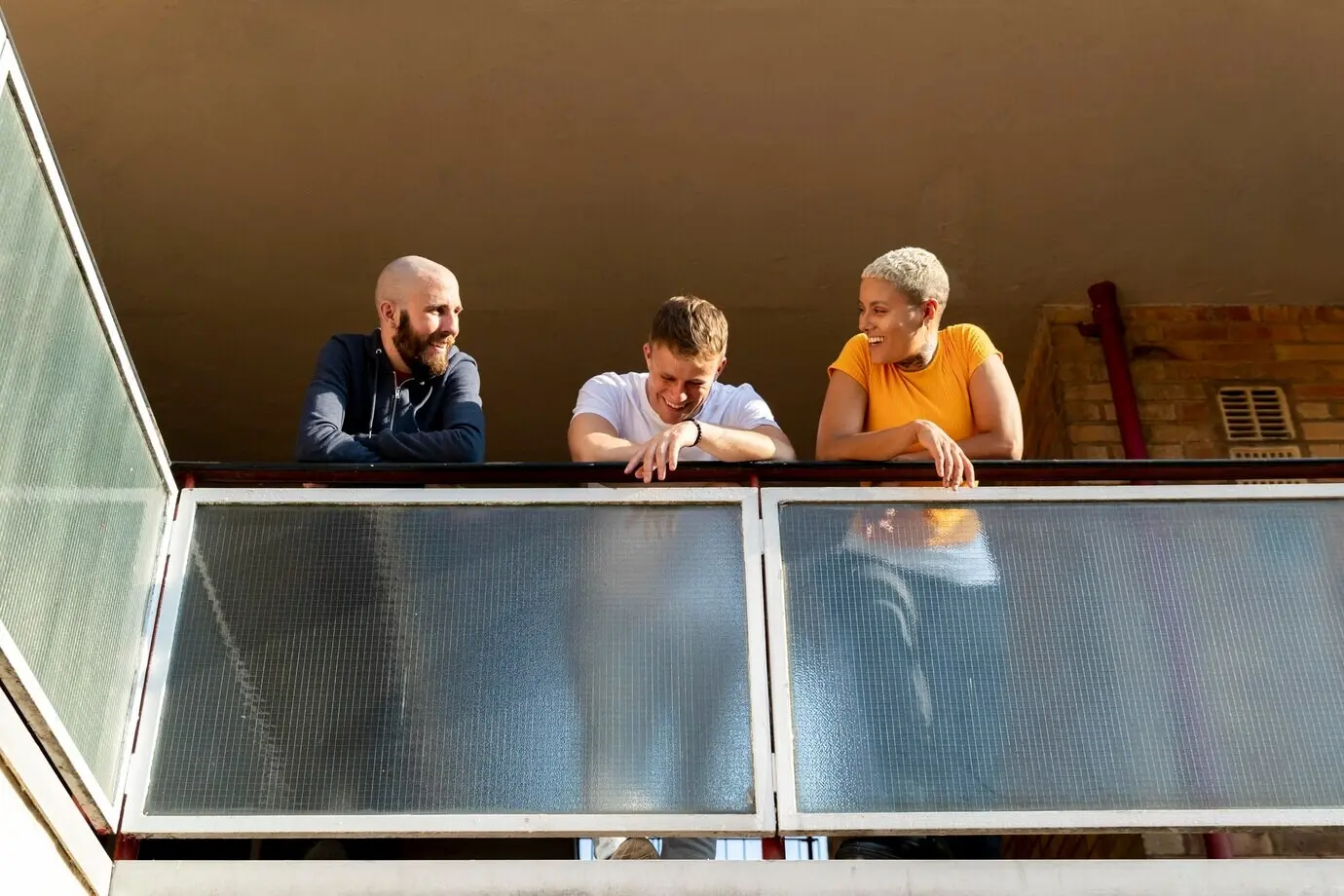
On completed towers, compact ultrasonic anemometers and protected pressure sensors can log weeks of data from volunteer residents’ balconies. Correlating wind roses with discomfort reports turns anecdotes into evidence. Those traces validate simulations, highlight seasonal quirks, and help prioritize which façades deserve design attention during retrofit or next‑tower planning.
Uncertainty, Sensitivity, and Convergence

Quantify uncertainty using mesh‑independence studies, multiple inflow seeds, and parametric sweeps of roughness and porosity. Track probe variability, not only means. Present confidence intervals on velocities and exceedance hours, and state limitations transparently. Decision‑makers appreciate clarity, and your future self avoids rework when assumptions are documented and traceable.


Comfort, Safety, and Design Interventions

Balcony comfort depends on more than a single velocity threshold. Gustiness, directionality, and frequency shape whether space feels lively or hostile. By pairing CFD with criteria like Lawson or NEN 8100, you can test interventions—porous screens, rounded corners, baffles, planting—and quantify improvements before owners commit budgets or residents lose patience.

Case Story: Taming Gusts on the Forty-Third Floor

Here is a candid narrative from a coastal tower where residents on levels forty to forty‑five abandoned their balconies. We mapped winds, ran RANS for screening, then LES for gusts, and progressively tuned parapets and screens. The journey illustrates how evidence, empathy, and iteration can rescue cherished outdoor rituals.

Workflow, Collaboration, and Next Steps

A Repeatable Pipeline

Automate mesh generation around edges, maintain templates for inlet profiles, and capture probes and post‑processing in code. Store assumptions in a living checklist. With each project, your library grows, reducing effort, spreading good practices to colleagues, and freeing time to tackle questions that truly need human judgment and care.

Communicating Results Across Disciplines

Automate mesh generation around edges, maintain templates for inlet profiles, and capture probes and post‑processing in code. Store assumptions in a living checklist. With each project, your library grows, reducing effort, spreading good practices to colleagues, and freeing time to tackle questions that truly need human judgment and care.

Join the Conversation

Automate mesh generation around edges, maintain templates for inlet profiles, and capture probes and post‑processing in code. Store assumptions in a living checklist. With each project, your library grows, reducing effort, spreading good practices to colleagues, and freeing time to tackle questions that truly need human judgment and care.

Fenotinikanilufoza
Privacy Overview

This website uses cookies so that we can provide you with the best user experience possible. Cookie information is stored in your browser and performs functions such as recognising you when you return to our website and helping our team to understand which sections of the website you find most interesting and useful.